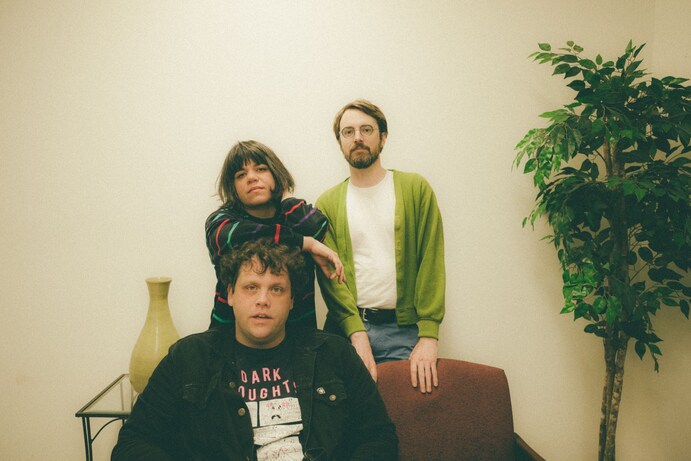

If you took the fearlessness of Kathleen Hanna and crossed it with the six string ferocity of Tony Iommi, you would get singer/guitarist Marissa Paternoster. Her voice is enormous and she attacks her G&L S-500 on stage as if every gig is the most important one she’ll ever play. Her band, Screaming Females, has been carrying the DIY torch since 2005 with each album serving as another example of why their energy demands to be experienced by as many people as possible.
For me, my connection to the Screamales began in 2020 following a personal loss in which I was left grasping for something to pull me out of the emotional morass that I found myself in. When I heard “I’ll Make You Sorry” while on a late-night YouTube run, I was hooked, so I dedicated the ensuing weeks to learning everything I could about the band’s catalog. I may not have had a circle of friends to turn to, but I now had the collective excellence of Paternoster, bassist Mike Abbate, and drummer Jarrett Dougherty to get me through the darkest days.
I spoke with Paternoster recently about the band’s new album, her approach to the guitar, and her affinity for Smashing Pumpkins. If you don’t have their show on Nov. 10 at Mohawk Place in your calendar yet, rectify that immediately.
MNOD: Your latest album, “Desire Pathway,” came out back in February and I haven’t been able to turn it off. Was COVID-19 to blame for the five-year break between “All at Once” and the new one or did it just happen?
Paternoster: We weren’t really on a hiatus or anything. We were just hanging out like everyone else was. I think three of the early files we were trading ended up on the final album. I’m constantly writing, so these songs came together pretty much the same way they always have. We recorded all in the same room together at Pachyderm Studios, which is where quite a few legendary ’90s albums were made. Albums like Nirvana’s “In Utero” and P.J. Harvey’s “Rid of Me.” I didn’t change any lyrics or anything to fit the pandemic, so what you hear on the record is a representation of how I was feeling before everything happened.
MNOD: “Brass Bell” is a powerful opener that draws you right in. You’ve acknowledged previously that Smashing Pumpkins are a major influence on you, but I can definitely hear a Black Sabbath vibe on these riffs. Did you have a feeling early on that it would fit perfectly as the lead track?
Paternoster: I don’t actually get that involved in the sequencing of our albums. That’s something that Jarrett and Mike are more into. I think Billy Corgan has said that Black Sabbath is his favorite band, so it makes sense that the riff would sound like that. Who writes better riffs than Black Sabbath?
MNOD: I played the album for my son last night and his favorite track is “Mourning Dove.”
Paternoster: Kids like ‘Mourning Dove,’ because it’s got an upbeat vibe.
MNOD: What I love about “Desire Pathway” is how it encompasses the heaviness of your previous albums while also bringing some beautiful melodies to the table. “Beyond the Void” comes to mind.
Paternoster: We usually record the instrumental tracks before the lyrics come, so I’m constantly humming things here and there that could potentially wind up being used in a song. Our producer, Matt Bayles, has been working with us for a while now and knows how to get the most out of our material.
MNOD: How has your confidence grown as a singer since you started out?
Paternoster: I didn’t want to be the singer at the beginning. I’m shy by nature, but being in a band has definitely helped me grow out of that in many ways. I became more comfortable with my voice as time went on and have learned different ways to take care of it, as well, now that I’m an old woman.
MNOD: Who were some of the singers you looked up to when you were younger?
Paternoster: Nina Nastasia is my favorite living singer-songwriter. She’s been a tremendous influence on me for a long time. Also, the Riot Grrrl stuff that was coming out of the Pacific Northwest in the ’90s saved my life. I mean, it saved a lot of people’s lives, but it showed me that queer people had a place in music and that I could participate in a band. That scene gave a voice to people who had previously been left out, which meant everything to me. Sleater-Kinney are another band that I’ve always looked up to. I loved Corin Tucker’s voice and how she presented herself.
MNOD: Your guitar solos always stand out to me, because they fit the song without acting as an excuse to overplay. How much time do you put into constructing your solos for each album?
Paternoster: I don’t really focus too heavily on them. They’re improvised in the moment and evolve when we play the songs live. I don’t play the same thing every time and we also don’t play the same set every night on tour. There are certain pedals that I definitely need to get the sound I want and I’d probably be upset if I didn’t have them, so I’m not one of those players who just plugs in and goes.
MNOD: I play the guitar for fun, but I remember playing along with “Gish” and “Siamese Dream” just to jam out. Were those albums important to you in the same way?
Paternoster: Definitely. “Siamese Dream” has always been my favorite, but “Gish” was also fun to play with. I wouldn’t necessarily play along exactly, but I would play something over the top of certain songs in the same key. I didn’t listen to anything after “Machina,” though, so I can’t really tell you what the other stuff sounds like. They’re continuing to crank albums out, though.
MNOD: I’m a big proponent of physical media. As someone for whom designing the album covers is such an important part of the process, how do you feel about streaming given that people end up missing out on the visual aspect?
Paternoster: As long as people are listening, I don’t think it matters to me how they’re getting it. It does cause me grief, though, because I spend a lot of time on the images and packaging with the hope that people will engage with it. I’m a millennial with hundreds of CDs, so I do think there’s something to be said for listening to an album and being able to hold it in your hands. Being out on the road constantly means that I use streaming a lot, but I definitely have an issue with services not paying artists appropriately.
MNOD: Have you found it harder to break into music or the art world?
Paternoster: I haven’t really tried to break into the art world in a serious way. I went to art school and discovered that it wasn’t really something I wanted to do. I was way more focused on the band and playing shows. Art goes right along with the DIY aspect of punk and the music we make, so that’s how it comes into play with the band.
MNOD: You’re playing Mohawk Place in November, which has a capacity of 237 people. What is it about the intimacy of a club that you love the most?
Paternoster: That’s usually the amount of people that come to see us, so I definitely prefer that to a 3,000 seat theater. We’ve gotten on bills as openers for bigger bands before, but we’re definitely a DIY club band. I remember there was a guy at Mohawk who used to do a crazy light show for us, so hopefully he’s still around and will be there this time.
You can catch Screaming Females on Nov. 10 at Mohawk Place with Dazy.
See http://www.screamingfemales.com or http://www.buffalosmohawkplace.com for details.
“Desire Pathway” is available now wherever music is disseminated, but do us all a favor and pay for a physical copy.

 Music N' Other Drugs
Leave a comment