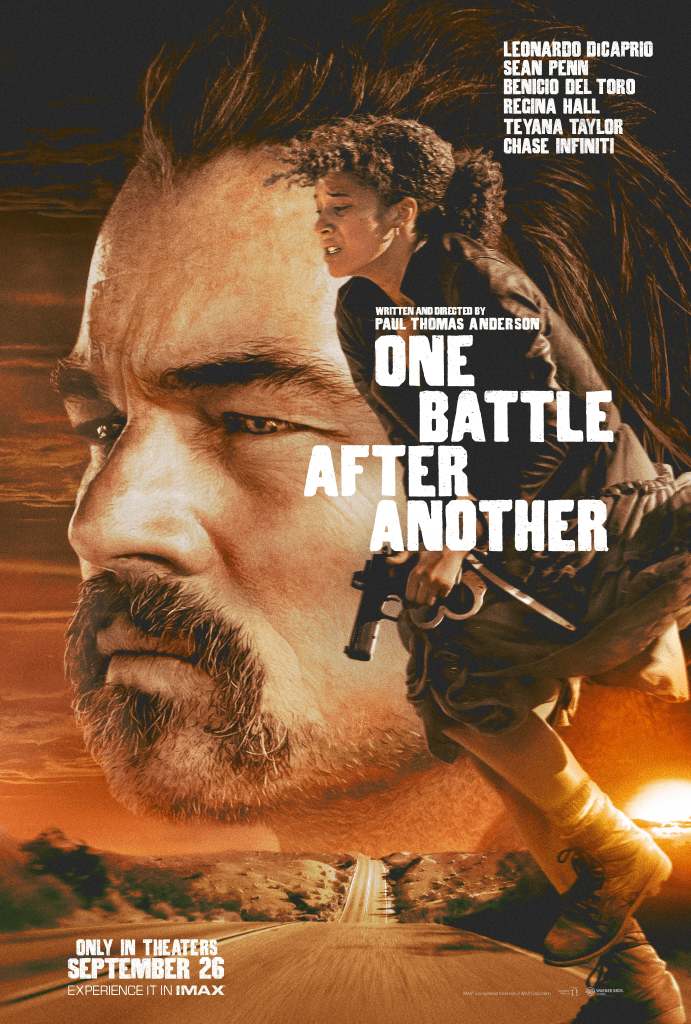
If ever it were possible for a movie to lose $100 Million at the box office while remaining on the short list for Best Picture, Paul Thomas Anderson’s latest fits that bill. While his reputation is earned, the critical community has spent so much time blowing its collective wad in support of this project that the lack of return on Warner Bros.’ investment may not matter in the end. People see what they want to see and the fact that Anderson opens with the bombing of an immigration detention center initiates a Pavlovian response in the audience to celebrate the film regardless of how good it actually is.
Leonardo DiCaprio spends most of the 162-minute runtime stoned out of his gourd and employs impeccable comedic timing in an attempt to make the most of what he’s been given, but the problem is that none of these Weather Underground-esque misfits feel like multi-dimensional characters. Everyone is painted with such narrow strokes that it’s hard to believe any of the interviews out there denying that the script has an obvious political agenda.
If you’re reading this, you’re likely aware of my aversion to either side of the aisle in America at this moment, but you should also be aware that I have no use for anyone pretending to be something other than what they really are. I’d have more respect for Anderson and his talented cast if they just admitted what the rest of us already know instead of continuing to suggest that this story doesn’t choose a side.
If we apply the reasonable person standard to this scenario, it’s easy to envision the average moviegoer identifying the biases on screen without requiring further investigation. The members of the French 75 are good, Capt. Steven J. Lockjaw (Sean Penn) is bad, and Perfidia Beverly Hills (Teyana Taylor) prioritizing the cause over her child is redeemable.
I would recommend watching Sidney Lumet’s 1988 film, “Running on Empty,” for a more nuanced glimpse into how children are forced to reckon with the revolutionary past of their parents, because the way in which Willa (Chase Infiniti) carried on her mother’s legacy here without much introspection didn’t work for me.
Entertaining? Sure.
One of the “best films ever made?” Not even close.
*** out of 4
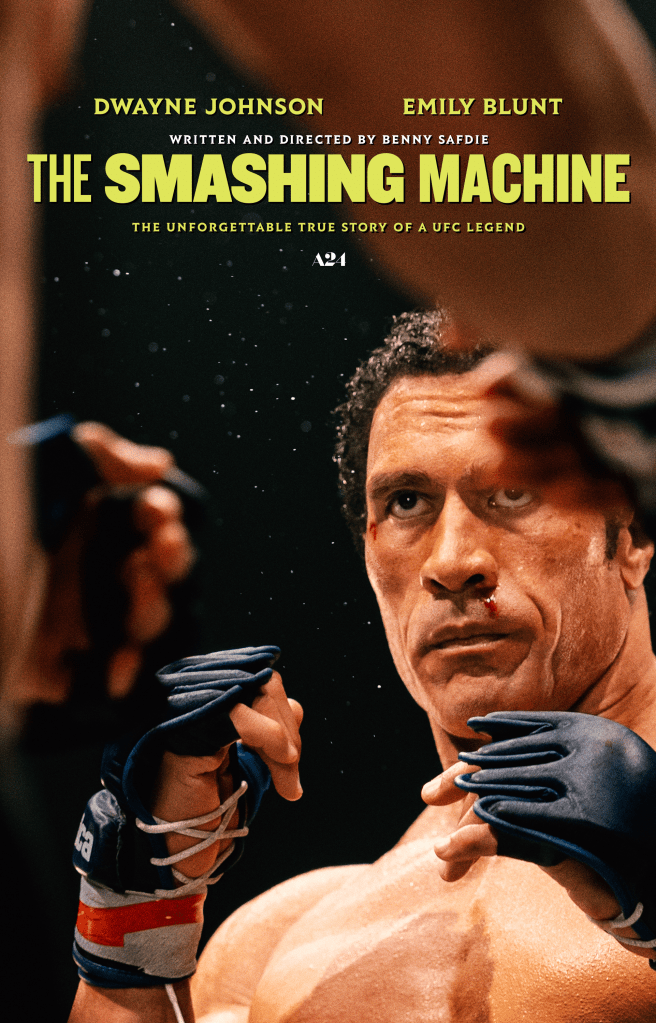
Benny Safdie’s “The Smashing Machine” isn’t the first film to fall victim to a trailer that is far superior to the finished product, and it certainly won’t be the last. What aspires to be a cerebral examination of a fighter whose commitment to his craft left him vulnerable in every other aspect of his life ends up being a surface-level diversion bolstered by a performance whose commitment is seldom rewarded.
Dwayne Johnson goes deeper than ever and the scenes in which he quarrels with Emily Blunt are dynamite on both sides, but that’s all we get. The actual fight sequences fall flat and there’s not enough uniquity in Mark Kerr’s personality to justify his life being adapted for the big screen. Just as Evel Knievel did during the ’70s, Johnson still gets credit for the attempt.
If Safdie’s goal was to zero in on the plight of mixed martial artists whose careers peaked prior to the sport becoming accepted by the mainstream, he could have chosen guys like Royce Gracie, Dan Severn, or Mark Coleman and likely had the same effect.
**1/2 out of 4
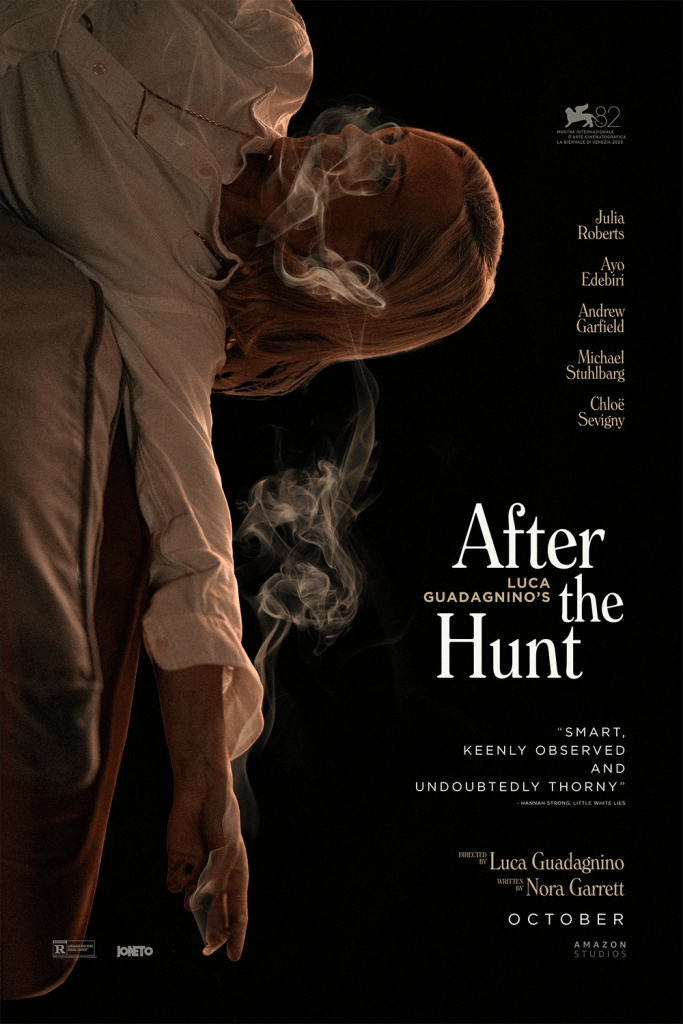
While there are a lot of gray areas within the #metoo movement that Luca Guadagnino wants to explore in “After the Hunt,” he muddies the narrative waters to such an extent that the film’s initial mystery ends up taking a back seat to an Ivy League pissing match. Julia Roberts gives one her best performances in years as Alma, a narcissistic Yale professor on the cusp of tenure, while Andrew Garfield shines as one of her colleagues/rivals who may or not have crossed the proverbial line with Maggie, one of her prized PhD students, played by Ayo Edebiri.
The generational divide between Alma and Maggie rears its head once the latter opens up about what allegedly occurred, because Maggie assumes that she’ll be given the benefit of the doubt and Alma appears to know all-too-well how lives can be destroyed if the truth is adjusted. All of the makings of a solid thriller are present, and I was fully on board for the first 45 minutes or so.
However, chaos eventually ensues and few of the central questions are answered by the time the credits roll, which is a shame given how much talent was involved in this project.
** out of 4
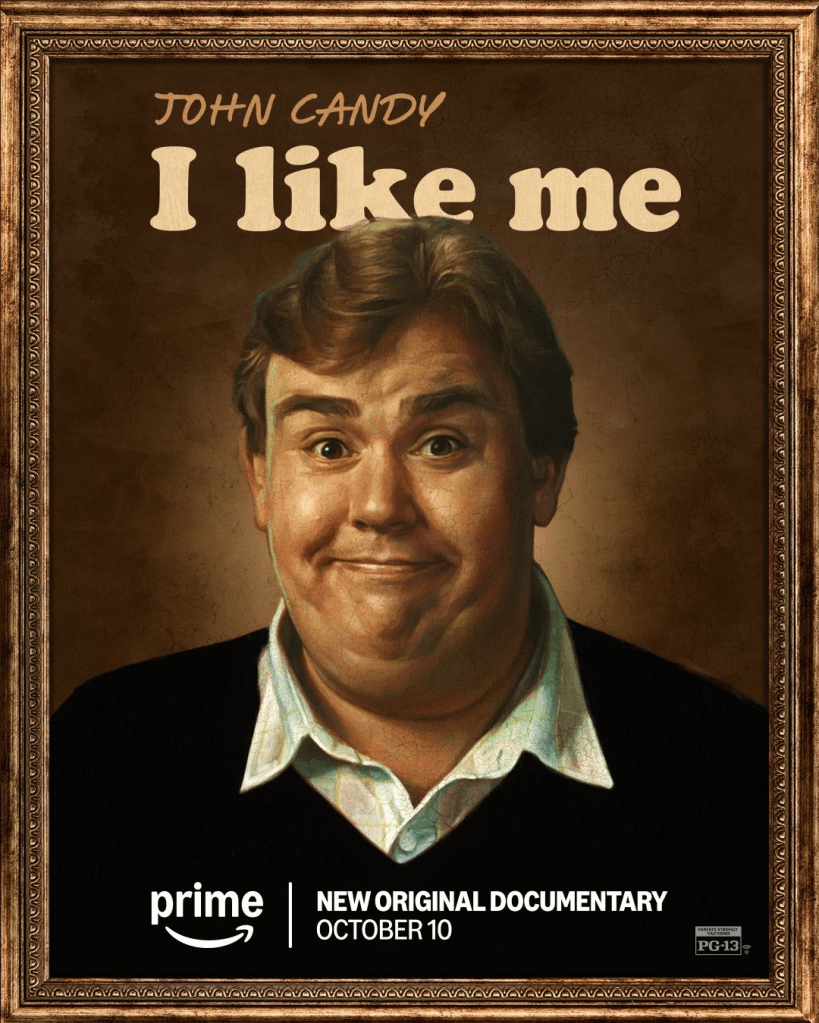
I’ve read a lot of reviews criticizing this Ryan Reynolds-produced documentary for being a classic example of hagiography and I can’t blame reviewers for getting that impression. None of the subjects drop an ounce of negativity in regard to Candy’s life and career, and the fact that he died in 1994 makes trawling for the truth that much harder.
That said, it’s also entirely possible that Candy never gave anyone a reason to dislike him to the point that they’d speak out 30+ years after his death. It’s possible that he really was the loving husband, father, and friend that everyone says that he was, which I know is antithetical to everything our society values in 2025.
Personally, I’ve been a Candy fan since I first saw “Home Alone” back in 1990 and I can quote more of his movies than most people would consider healthy, so, as a heartwarming dose of nostalgia when such things are needed, this film is just what the doctor ordered.
*** out of 4
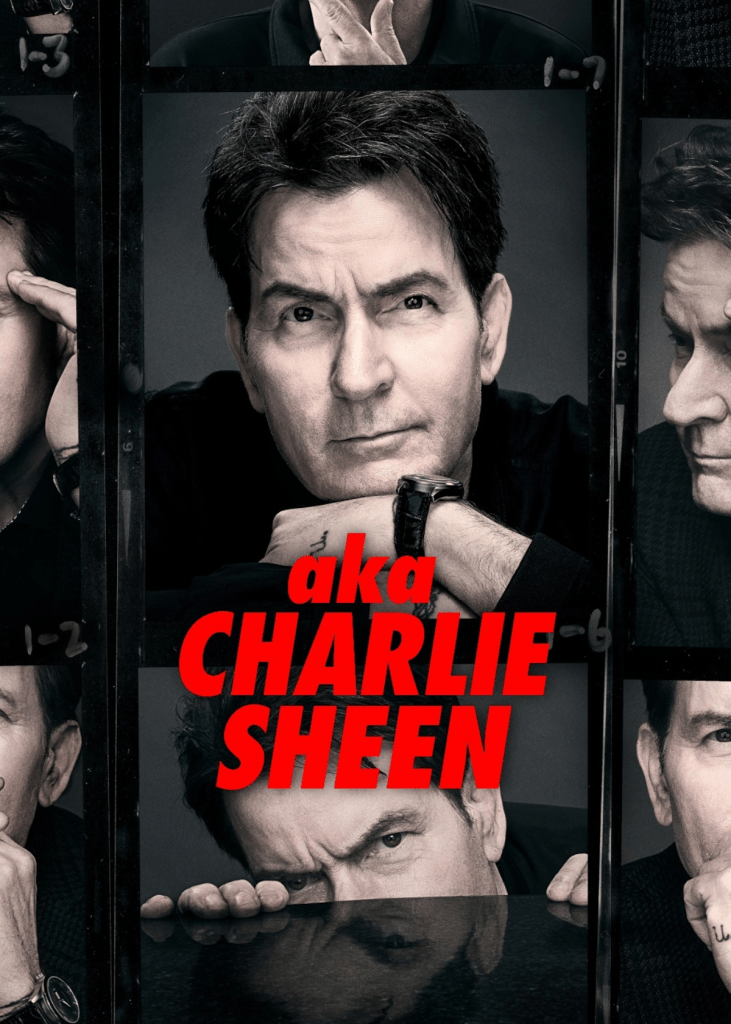
If you watch “aka Charlie Sheen” right after “John Candy: I Like Me,” the stark contrast between the two subjects is even more glaring. The brutal honesty with which Sheen, his family, his friends, his lovers, and his fellow actors tell this story is simultaneously refreshing and insane, so you need to see it for yourself.
***1/2 out of 4
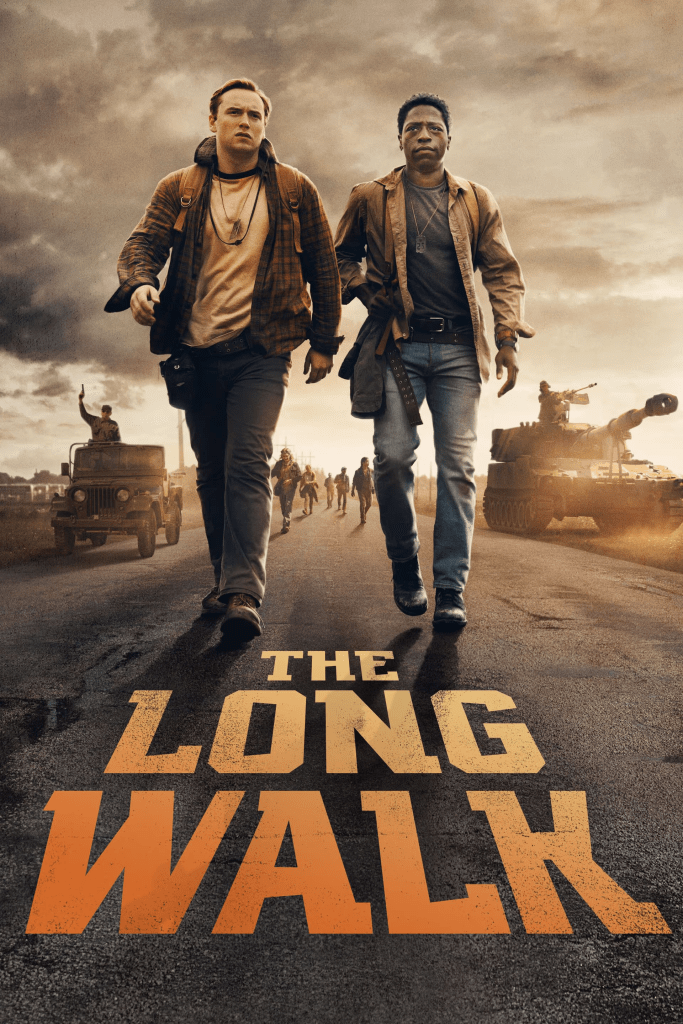
Not since 2007’s “The Mist” has a Stephen King adaptation struck such a deep chord in me and I couldn’t care less what the rest of the critical community thinks. Cooper Hoffman, Peter McVries, and Ben Wang deliver three of the finest performances you’ll see all year, and Francis Lawrence levels up from “The Hunger Games” to create something truly meaningful.
**** out of 4

 Music N' Other Drugs
Leave a comment