“If you don’t think you have the blues, just keep living.” – Buddy Guy
I’ve been fortunate to speak with a number of blues musicians throughout my writing career and one of the topics that always comes up is the genre’s ability to thrive despite being positioned as a niche product by the mainstream media. Sure, legends such as Buddy Guy and Taj Mahal are revered, but the overall discourse is often framed in historical context rather than the acknowledgement that the blues, like the Constitution, is a living document whose relevance to modern life remains indispensable.
Keep that in mind as we approach the United States Semiquincentennial next week, because the story of the blues is the story of America. People have chiseled musical beauty out of societal ugliness for generations and the only thing that has changed is the portal though which the material is consumed.
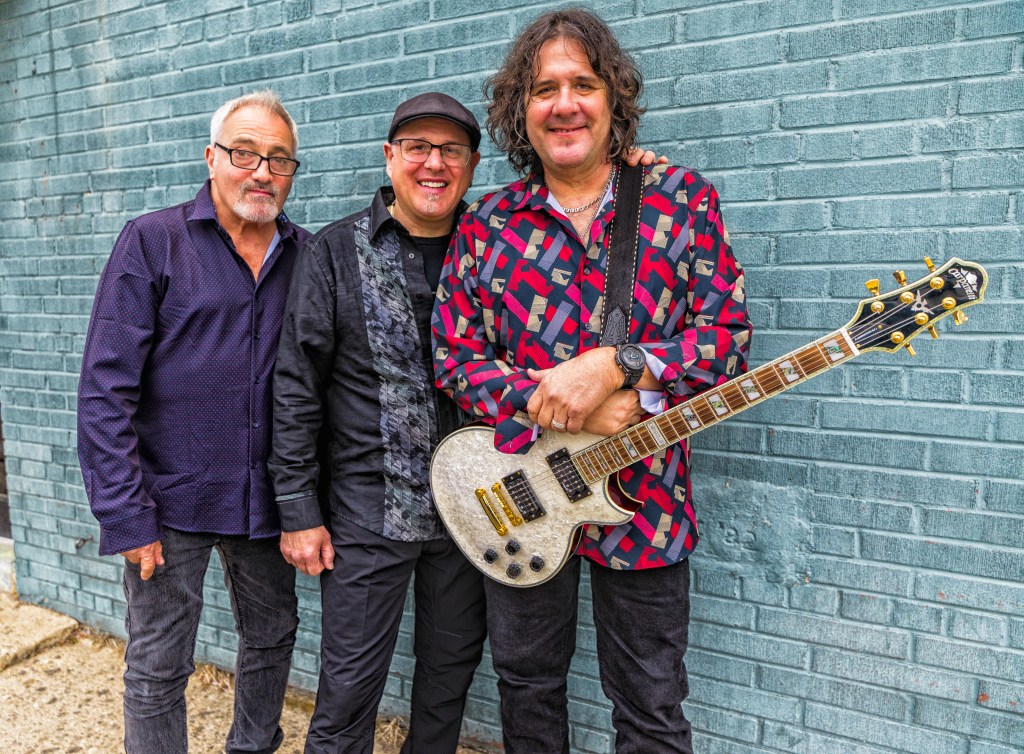
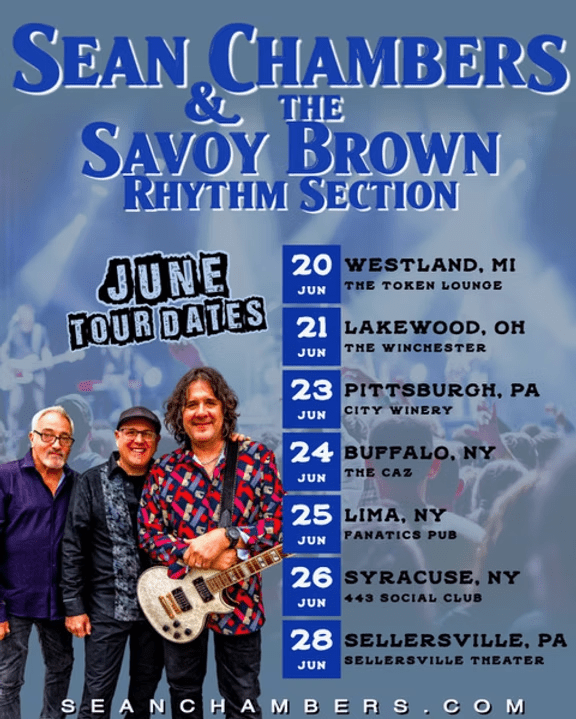
At a time when Live Nation couldn’t care less if audiences are on board with their philosophy or not, do what you can by supporting real artists like Sean Chambers, who plays The Caz on June 24 with the Savoy Brown Rhythm Section in tow. Chambers was named one of the “Top 50 Blues Guitarists of the Last Century” by Guitarist Magazine and plays with a hard-driving fire that can’t be replicated regardless of how hard AI wants to convince you otherwise.
I caught up with Chambers recently to discuss the show and how getting former Savoy Brown guitarist Kim Simmonds’ blessing to move forward with bassist Pat De Salvo and drummer Garnet Grimm meant everything to him.
MNOD: I spoke with drummer Garnet Grimm back when Savoy Brown’s final recordings with Kim Simmonds were released and he briefly mentioned how you guys came together. Was it a natural fit from your perspective?
Chambers: Definitely. We had known each other for a while and were all friends, so the chemistry was real from the beginning. Bassist Pat DeSalvo introduced me to guitarist Kim Simmonds in 2021, and I even sat in for Kim when he got sick. The great thing about it is that Kim gave it his blessing and I was flattered to be asked. Kim and I used to talk all the time about music or football, so we got along really well. Kim never got the acclaim of a Beck or Clapton, but he deserved it. He was such an influence on that whole blues rock scene of that era. There was no slacking with Kim, and he was never on autopilot. When he died on Dec. 13, 2022, Pat, Garnet, and I jammed together and we’re still going strong nearly four years later.
MNOD: Describe the process of putting together the album that you guys recorded at Daryl’s House.
Chambers: I’m really good friends with the engineer Mark Everton Gray, but he couldn’t commit to this album due to scheduling. However, I loved working with Peter Moshay on that project, who has been Daryl Hall’s audio and sound engineer for the last 30 years. He does all of the front-of-house work at Daryl’s House and he recorded this album beautifully. We let the audience know that we were recording a live CD that night, so the crowd was perfect. We redid three songs in the moment, but there were no overdubs afterwards.
MNOD: What was it about Daryl’s House that made you want to record there?
Chambers: It was really a no-brainer. That room is set up to record a live show in, because both the audio and video capabilities are stellar. I love playing the smaller, more intimate rooms due to there being a lot of energy that can’t be replicated other places. We put together a setlist that filled out the room and fed off the intensity of the crowd.
MNOD: What do you think it is about the blues that transcends the generational divide?
Chambers: That’s a great question. I think the blues is a music that once it grabs you, it has you for life. You feel it and you get it. I got my first guitar when I was 11 and got into the blues when I was 15. I was into stuff like Tom Petty, Lynyrd Skynyrd, the Allman Brothers Band, Judas Priest, and Ozzy, so that’s all part of my musical DNA. The moment that changed things for me was riding around in my friend’s pickup and he played Jimi Hendrix’s “Red House” on cassette. All of the hair on my arms stood up and it’s almost as if that was the missing puzzle piece. I then spent the next two years dedicating myself to the blues. By the time I started my own band at 19, I was into classic guys like Son House and Howlin’ Wolf. Some people say the blues is dying, but that’s not really the case at all. Its roots are everywhere.
MNOD: What can audiences expect when you guys hit the stage at The Caz later this month?
Chambers: We never play the same set twice. I play what I feel and let the vibe of the audience determine where the show goes. I learned a lot from playing in Europe, Canada, and all across the States, so I’m always dedicated to putting on the best show possible. While our audiences tend to be older, I do get fans in their 20s and 30s telling me how much they respond to what I’m putting out there every night, which means a lot.
Sean Chambers & the Savoy Brown Rhythm Section play The Caz on June 24.
See https://www.thecazbuffalo.com or https://www.seanchambers.com for details.



Leave a Reply